
See how easy it is to make amazing videos
A comprehensive survey of 2,000 Americans destroys the notion of “national” fast food preferences and reveals America isn’t one food nation—it’s one nation with several different food preferences.
Major food publications regularly report “national” fast food trends as if 340 million Americans share the same cravings, spending habits, and brand loyalties. The typical headlines read something like: Pizza beats burgers. McDonald’s is number one. Americans love fast food.
But these headlines mask a more complex reality—one of national averages that hide the most significant regional food divide in American history.
A comprehensive survey of 2,000 Americans across 47 states has shattered the comfortable myth of a unified American fast food experience. The data reveals something far more profound and disturbing: where you live doesn’t just influence your fast food choices—it completely determines them. We’re not talking about mild preferences. We’re talking about Arizona residents spending $63.50 weekly on fast food while Michigan residents spend $13.12—a nearly five-fold gap that represents the starkest consumer inequality hiding in plain sight.
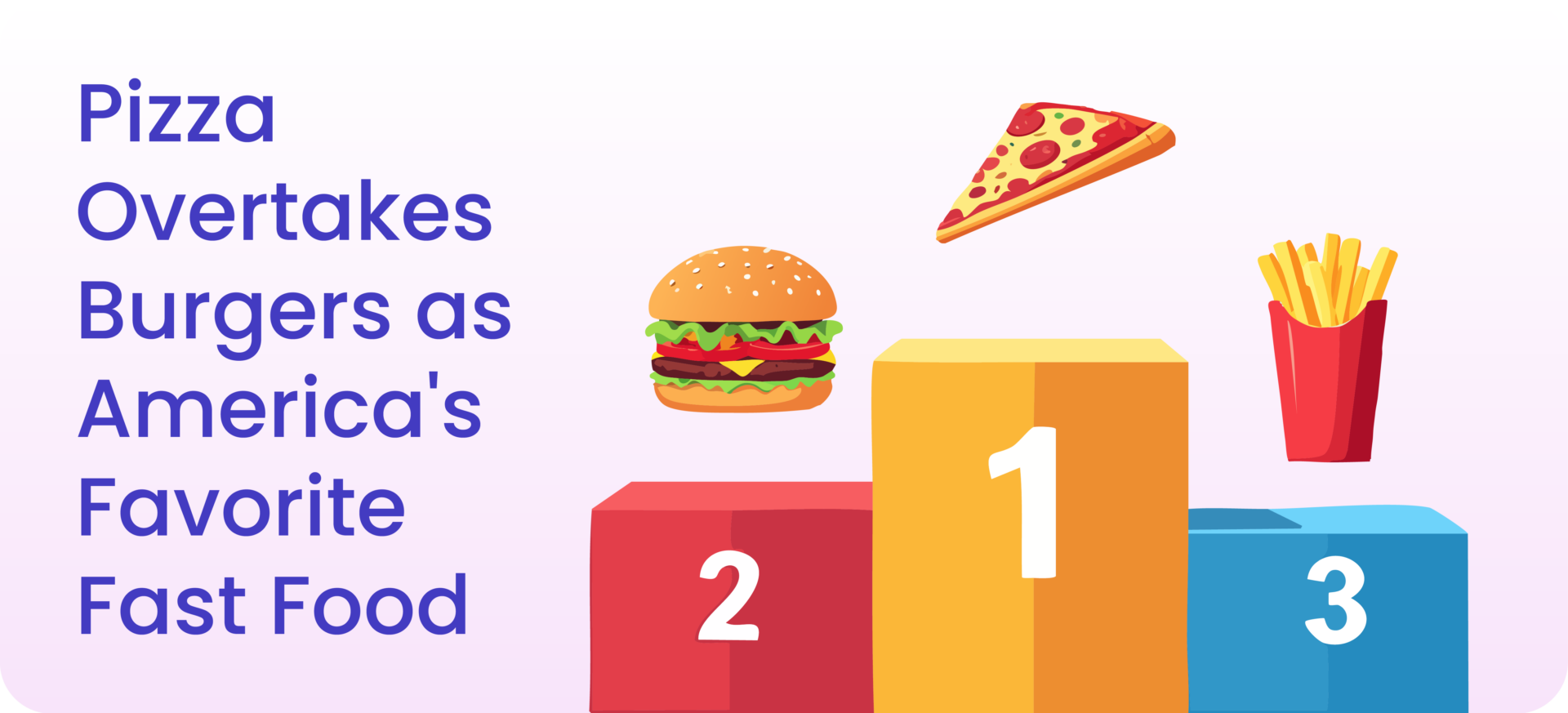
Pizza Overtakes Burgers as America’s Favorite Fast Food in Historic 2025 Shift
For the first time in American fast food history, pizza has edged past burgers as the nation’s preferred fast food. The data shows pizza at 30.7% and burgers at 29.3%—a slim 1.4 percentage point margin that food industry publications have trumpeted as a seismic cultural shift.
But that 1.4% margin tells a more complicated story than the headlines suggest.
This narrow lead falls within any reasonable margin of error and reflects geographic sampling patterns more than a genuine nationwide preference shift. The survey captured 43.7% of respondents from the South and 19.0% from the Northeast—regions that collectively lean more toward pizza, while the Western states with stronger burger cultures made up only 20.7% of the sample.
The real revelation isn’t that pizza “beat” burgers. The real revelation is that America has no consensus favorite fast food at all. Regional preferences are so strong and divergent that claiming a “national favorite” based on a 1.4% margin misses the entire point.
Massachusetts residents prefer pizza at 60%. Pennsylvania sits at 55% pizza preference. These northeastern states form a genuine Pizza Corridor where the national trend actually reflects local reality. But travel west and the story flips completely.
California residents prefer burgers at 53.1%—not a regional quirk but a statement from 39 million people in America’s most populous state who are overwhelmingly rejecting the supposed “national” trend. Texas, the second-largest state, shows 46.7% burger preference. Arizona maintains 50% burger loyalty. Nevada sits at 42.9%.
Combined, California and Texas alone represent 67 million Americans—20% of the country—who prefer burgers over pizza. The entire western third of America appears to have ignored the memo about pizza’s victory.
The “historic shift” narrative crumbles when you map preferences geographically. What we’re actually seeing is the Northeast’s pizza culture being labeled as America’s pizza culture because high-population coastal states drive national averages. The 38.6% pizza preference in the Northeast pulls the national number upward, creating the illusion of unified preference that doesn’t exist across most of America’s geography.
This isn’t about pizza versus burgers. This is about how regional food cultures have become so distinct that comparing them under a single “national” statistic has become meaningless.
Americans Give Fast Food a Failing Grade of 2.9 Out of 10 for Health—But Can’t Stop Eating It
Americans have delivered a devastating verdict on fast food’s healthiness: a rating of 2.9 out of 10. That’s barely healthier than products with warning labels. They rate ingredient quality at 3.1 out of 10 and “filling factor” at 3.3 out of 10—failing grades across every meaningful metric.
Yet 41.1% of Americans eat fast food multiple times weekly. Only 0.5%—just 10 people out of 2,000 surveyed—claim to never eat fast food. The average American spends $1,904 annually on food they openly acknowledge is terrible for them.
This isn’t ignorance. This is a conscious choice under economic and time pressure, creating a nationwide cognitive dissonance: Americans know fast food is unhealthy, know it’s increasingly unaffordable, yet can’t or won’t stop consuming it.
The state-level data makes this contradiction even sharper. Arizona residents eat fast food multiple times weekly at a 62.5% rate while spending $63.50 weekly. They’re not naive about health impacts—they’re making calculated decisions where convenience and time scarcity override health concerns entirely.
Across all states, french fries remain the universal unifier. They’re consumed regularly by 71.4% of Americans—the highest of any fast food item. Despite knowing they’re unhealthy, Americans can’t stop eating them. Hamburgers follow at 71.2% regular consumption, pizza at 63.5%.
When asked what improvements they want most, 30.8% of Americans prioritize healthier, fresher options. Another 18.7% want better quality ingredients. Nearly half of all desired improvements relate to health and quality—the exact attributes Americans rate as abject failures.
But this desire for healthier fast food doesn’t translate into behavior change. It’s aspirational thinking disconnected from actual choices. Americans want fast food companies to make their products less harmful, but they’re not willing to stop eating those products in the interim.
The health hypocrisy extends to what Americans don’t want. Only 1% desire more plant-based options. The vegan fast food revolution that dominated food industry coverage for years and drove menu innovation at major chains has never materialized in actual consumer behavior. Americans want fresher ingredients and better quality meat, not substitutes for meat.
The message is clear but contradictory: make fast food healthier so we can feel better about eating it, but don’t expect us to change our consumption patterns based on health concerns.
This creates a perverse cycle. Fast food companies have minimal incentive to improve health profiles when consumers continue buying regardless of quality ratings. Meanwhile, consumers feel trapped by time constraints, economic pressure, and ingrained habits that override their stated health priorities.
The 2.9 health rating isn’t just a number. It’s evidence of a national acknowledgment that convenience has completely defeated nutrition in the American diet.

Arizona Leads the Nation in Fast Food Spending at $63.50 Weekly—Nearly Double the U.S. Average
Arizona residents spend $63.50 weekly on fast food—about 73% more than the national average of $36.62 and nearly double what many states spend. Combined with the highest consumption frequency in the nation at 62.5% eating fast food multiple times per week, Arizona represents what happens when fast food transitions from convenience to lifestyle necessity.
The annual impact is staggering. Arizona residents spend $3,302 on fast food yearly. That’s $1,398 more than the national average—enough for a used car down payment, a semester of community college tuition, or six months of health insurance premiums. This is discretionary spending on a scale that dwarfs most consumer categories.
Several factors create Arizona’s extreme fast food dependence, and none of them relate to income levels or cost of living.
Car culture dominates the explanation. Phoenix and Tucson rank among America’s most car-dependent metropolitan areas. Drive-thrus become the path of least resistance for every meal when walking or public transit barely exist as options. The infrastructure itself funnels residents toward fast food at every turn.
Climate intensifies the pattern. Extreme summer heat makes cooking at home genuinely miserable for months on end. Fast food drive-thrus offer appealingly climate-controlled convenience when stepping outside feels like walking into an oven. The weather isn’t just uncomfortable—it’s a structural force reshaping food choices.
Demographics play a role too. Arizona’s younger population and significant military presence create demographic segments more inclined toward fast food consumption. These groups have less attachment to home cooking traditions and more acceptance of fast food as regular meals rather than occasional convenience.
Market saturation completes the picture. Intense fast food concentration and promotional competition create a ubiquitous presence. You can’t drive two miles in Phoenix without encountering a dozen fast food options, all competing aggressively on price and convenience.
Arizona’s 50% burger preference adds another dimension. The state shows cultural conservatism that reinforces rather than challenges fast food habits. There’s no coastal food consciousness pushing back against fast food dependence, no dense urban environment creating alternative options. Fast food isn’t something Arizona is trying to move past—it’s embedded in how the state functions.
Arizona isn’t an outlier. It’s a preview. As America continues sprawling into car-dependent suburbs, as working hours extend, and as convenience increasingly trumps quality considerations, more states will follow Arizona’s pattern. The infrastructure and culture that created Arizona’s spending levels are spreading, not shrinking.
The state’s combination of highest spending and highest frequency proves that price sensitivity has limits. Even as 82.3% of Western residents report that fast food has become “much more expensive,” Arizona consumers continue buying at rates that dwarf national patterns. They’re either absorbing price increases other states won’t tolerate, or fast food has become so culturally embedded that price becomes almost irrelevant.
Arizona represents the logical endpoint of American fast food culture: complete dependence sustained by infrastructure, climate, demographics, and cultural acceptance that override traditional cost-benefit calculations.
California Stays True to Burgers: 53% Buck National Pizza Trend in Surprising Loyalty Play
California residents prefer burgers at 53.1%—the highest rate among major states and a dramatic rejection of the national narrative that pizza has overtaken burgers as America’s favorite fast food. This isn’t a slight regional variation. This is 39 million people in America’s most populous and culturally influential state going in the opposite direction of the supposed national trend.
The state that invented wellness culture, juice cleanses, and avocado toast maintains fierce burger loyalty that contradicts every assumption about California food preferences. Coastal urban elites may obsess over organic, sustainable, artisanal food, but the survey captures the reality of suburban California, where In-N-Out Burger functions as cultural identity more than restaurant choice.
In-N-Out’s influence can’t be overstated. The chain has achieved legendary status in California through decades of consistency, quality messaging, and deliberate scarcity that make it a California-specific experience. Eating In-N-Out becomes an act of regional identity. Moving away from California means losing access to something genuinely valued, not just mourned for nostalgia’s sake.
But the burger loyalty extends beyond one chain. California gives Burger King a 22% preference share compared to McDonald’s 15%—a rejection of the Golden Arches in a state that should define national trends given its population and economic influence.
Burger King’s California dominance suggests something deeper than chain preference. It indicates California consumers value perceived quality over brand recognition. Burger King’s flame-grilled messaging resonates in a state that claims to care about how food is prepared, even when that “quality” distinction is largely marketing rather than a meaningful difference.
California’s $42.19 weekly spending sits above the national average but well below other high-income states. This suggests some food consciousness does translate to reduced fast food dependence—just not enough to abandon burgers entirely. Californians are eating slightly less fast food than Arizona or Ohio, but when they do eat it, they’re choosing burgers at rates that dwarf the rest of the country.
The California data exposes the flaw in declaring national food trends. If America’s largest state—one that often predicts and defines national consumer behaviors—shows preferences opposite the “national” trend, can that trend really be called national? Or is it just northeastern preferences being misidentified as nationwide shifts?
California’s split personality extends throughout its food culture. Farm-to-table restaurants coexist with drive-thru burger chains. Organic grocery stores sit next to fast food clusters. Progressive food values exist alongside some of America’s highest burger consumption rates. The contradiction isn’t hypocrisy—it’s geographic and demographic segmentation within a massive, diverse state.
The coastal urban centers that define California’s image represent a fraction of the state’s actual population and food consumption. Suburban sprawl from San Diego through Los Angeles to the Central Valley and beyond creates the real California food culture—and that culture remains firmly committed to burgers regardless of national trends or health concerns.
California’s burger loyalty proves that regional food cultures can resist national narratives even when those narratives are supposedly driven by the state itself. The pizza trend is real somewhere, but not in California, and California is too large and influential to be dismissed as a regional quirk.

Frugal New Yorkers Spend Just $23 Weekly on Fast Food, Nearly 60% Less Than Neighboring New Jersey
New York’s $22.93 weekly fast food spending ranks among the nation’s lowest despite having one of America’s highest costs of living. This defies every conventional assumption about income, prices, and consumption patterns. New Yorkers should be spending more on everything, including fast food. Instead, they’re spending less than almost anywhere else in America.
The explanation reveals why national averages fail to capture reality. New York’s dense urban environment creates fierce competition from alternatives that simply don’t exist in suburban and rural markets. Dollar pizza, food trucks, halal carts, and 24-hour delis provide faster and cheaper options than traditional fast food chains. Walk three blocks in Manhattan and you’ll pass a dozen food options that beat McDonald’s on speed, price, or both.
New York’s 35.7% preference for Taco Bell versus just 18% for McDonald’s reflects this competitive pressure. Taco Bell succeeds not because New Yorkers have unusual affection for Mexican-inspired fast food, but because Taco Bell actually delivers value in a market where cheaper alternatives exist for almost everything else. When dollar pizza shops line every major avenue, McDonald’s premium pricing becomes untenable.
The infrastructure difference matters enormously. New York’s subway system, walking culture, and dense urban layout mean fast food’s traditional advantages—drive-thrus, convenient parking, highway visibility—become irrelevant or even disadvantages. Real estate costs make urban locations expensive to operate, and those costs get passed to consumers who have multiple alternatives within walking distance.
But the most revealing comparison isn’t New York versus the national average. It’s New York versus New Jersey—neighboring states that share the same metropolitan area, yet show a 146% spending difference. New Jersey residents spend $56.50 weekly, while New Yorkers across the Hudson River spend $22.93. These are people who work in the same offices, earn comparable incomes, and shop at the same stores, yet their fast food spending patterns exist in completely different universes.
The Holland Tunnel apparently separates two distinct fast food realities. Car-dependent New Jersey, with its suburban sprawl and drive-thru accessibility, shows 58.3% of residents eating fast food multiple times weekly. Transit-dependent New York, where cars are optional and alternatives are ubiquitous, shows dramatically lower consumption despite higher overall living costs.
New York proves that fast food dependence isn’t inevitable—it’s infrastructure-dependent. Change the infrastructure and you change the consumption patterns, regardless of income levels or regional preferences. As other cities adopt more pedestrian-friendly, transit-oriented development, they may follow New York’s pattern of reduced fast food consumption not through consumer choice but through competitive pressure from alternatives that dense environments naturally create.
The New York versus New Jersey gap also proves that analyzing fast food by state-level data misses crucial nuances. Northern New Jersey functions as part of the New York metro area, yet the spending patterns couldn’t be more different. State borders don’t define food cultures—infrastructure, density, and transportation access do.
The Five-Fold Fast Food Spending Gap: Arizona’s $63.50 Weekly Versus Michigan’s $13.12
The number that should be dominating fast food industry headlines but isn’t: Arizona residents spend $63.50 weekly on fast food, while Michigan residents spend just $13.12. That’s a 384% difference—a five-fold spending gap that dwarfs inequality gaps in housing, gasoline, healthcare, or virtually any other consumer category you can measure.
This isn’t about cost-of-living differences. Arizona isn’t five times more expensive than Michigan. In fact, Arizona’s cost of living is only marginally higher than Michigan’s, making the spending gap even more inexplicable through traditional economic analysis.
The annual impact reveals the true magnitude of this divide. Arizona residents spend $3,302 yearly on fast food compared to Michigan’s $682. That’s a $2,620 annual difference—enough for a used car, a semester of community college tuition, or six months of health insurance premiums. This is wealth inequality hiding inside a Big Mac wrapper.
Michigan’s rock-bottom spending tells the story of economic pressure creating behavioral transformation. The Midwest shows the highest price sensitivity in the nation, with 83% of residents reporting fast food has become “much more expensive.” Michigan consumers aren’t just complaining about higher prices—they’re responding with dramatic spending cuts that reshape the entire regional market.
The spending collapse in Michigan reflects consumers who have hit their breaking point with fast food inflation. Unlike Arizona residents who absorb price increases and maintain consumption, Michigan residents are cutting frequency, switching to cheaper alternatives, or abandoning fast food almost entirely. The $13.12 weekly average suggests many Michigan residents have effectively stopped treating fast food as a regular option.
Meanwhile, Arizona’s continued high spending despite 82.3% of Western residents also reporting major price increases proves that different markets respond to inflation in completely opposite ways. Arizona consumers either have higher disposable income, greater willingness to absorb food inflation, or such embedded fast food dependence that price increases don’t change behavior.
The five-fold gap exposes the myth of the “national average” more clearly than any other statistic. When the national weekly average is reported as $36.62, that number is meaningless for both Arizona and Michigan residents. Arizona residents spend 73% above that average. Michigan residents spend 64% below it. The mythical “average American” spending $36.62 weekly barely exists anywhere in actual markets.
This matters because fast food pricing strategy, menu development, value offerings, and promotional campaigns are built around these fictitious national averages. Chains design value menus for a consumer who doesn’t exist while ignoring the radically different economic realities of their actual customers. A promotional strategy that works in Arizona will fail completely in Michigan, and vice versa.
High-spending states—Arizona, Virginia, New Jersey, Georgia, and Ohio—spend roughly 35-75% more than the national average. Low-spending states—Michigan, Illinois, New York, Nevada, and Pennsylvania—spend 30-65% below it. There is no middle ground, no cluster around the average. American fast food spending has bifurcated into distinct high-consumption and low-consumption markets that share almost nothing in common.
Even neighboring states with shared borders and similar economies show massive divergence. Ohio residents spend $49.73 weekly—nearly four times Michigan’s $13.12 despite sharing regional location, climate, economic base, and cultural background. The factors driving fast food spending operate at hyper-local levels that state boundaries can’t predict.
The Arizona-Michigan gap represents the starkest evidence that America doesn’t have a unified fast food culture. It has several fast food cultures operating under completely different economic rules, serving populations with different relationships to convenience, quality, and price. Comparing them under national statistics doesn’t illuminate trends—it obscures the most important story, which is that where you live completely determines your fast food experience in ways that have nothing to do with personal preference or conscious choice.
McDonald’s Holds the National Crown, but Regional Dominance Is Crumbling
McDonald’s maintains its position as America’s favorite fast food chain at 17.3%, with Chick-fil-A close behind at 16.1%—a gap of just 1.2 percentage points that represents the narrowest margin in decades. But these national numbers hide a more troubling reality for the Golden Arches: regional dominance is collapsing in strategically crucial markets.
California, America’s largest fast food market and a state that typically predicts national trends, gives Burger King a 22% preference share compared to McDonald’s 15%. This isn’t a slight preference—it’s a stunning rejection of McDonald’s in a market it should dominate given its scale, marketing budget, and cultural presence.
New York delivers an even more surprising result. Taco Bell commands 35.7% preference share in the state—nearly triple its national average and double McDonald’s 17.9% showing. The nation’s media capital, where food trends often begin, has decisively turned away from McDonald’s in favor of a value-focused alternative.
Nevada provides perhaps the most dramatic example of regional preference overwhelming national brand strength. Chick-fil-A crushes all competition with a 57.1% preference share, relegating McDonald’s to fighting for scraps in a market it should control through sheer ubiquity.
McDonald’s “national leadership” increasingly resembles winning the electoral college while losing swing states. The chain maintains statistical superiority through accumulated breadth—having locations everywhere and capturing customers across all markets—while hemorrhaging support in high-population, culturally influential states that shape future trends.
The top five chains—McDonald’s, Chick-fil-A, Taco Bell, Wendy’s, and Burger King—control just 63% of the market. That means 37% of American fast food spending flows to regional chains, local operations, and emerging brands. This fragmentation accelerates as regional preferences solidify and consumers reject one-size-fits-all national brands that fail to adapt to local tastes.
Chick-fil-A’s rise tells the most important story about changing fast food dynamics. The chain commands 19.8% market share in the South compared to its 16.1% national average—proof that regional dominance can be converted into national expansion. Chick-fil-A succeeds not by being everything to everyone but by being culturally embedded in specific markets and expanding from that foundation.
The South doesn’t organize around food types the way other regions do. It organizes around brand loyalty, specifically to Chick-fil-A. Southern consumers are simultaneously the least price-sensitive (only 72.5% report inflation concerns versus 83% in the Midwest) yet maintain fierce loyalty to specific brands that transcends rational economic behavior.
Meanwhile, the Midwest shows different dynamics. Taco Bell captures 21.3% regional market share by positioning as the value leader in price-sensitive markets. As inflation squeezes consumers and forces behavioral change, Taco Bell benefits from consumers trading down from premium-priced options while maintaining fast food frequency.
Regional preference patterns suggest McDonald’s national dominance may be unsustainable. The chain can’t simultaneously be the premium leader and the value leader. It can’t be culturally embedded like Chick-fil-A and operationally efficient like Taco Bell. It can’t appeal to health-conscious Californians and convenience-focused Arizonans with the same menu and messaging.
As regional food cultures diverge further, McDonald’s breadth becomes a liability. The chain’s attempt to serve everyone means it excels nowhere. California consumers choose Burger King for perceived quality. New York consumers choose Taco Bell for value. Nevada consumers choose Chick-fil-A for brand affinity. McDonald’s gets what’s left—consumers who have no strong preference or who value convenience over any specific attribute.
The fast food market is splintering along regional lines that national brands increasingly can’t bridge. McDonald’s maintains first place nationally, but that position grows more precarious as consumers in major markets actively choose alternatives that better match regional preferences, economic realities, and cultural expectations that no single national chain can satisfy.
The Inflation Reality: 77% Say Unaffordable, but Spending Patterns Diverge
Here’s where the data becomes genuinely strange: 76.6% of Americans say fast food has become “much more expensive,” yet average weekly spending remains at $36.62. Price sensitivity is nearly universal, but behavioral responses are wildly inconsistent across regions.
The Midwest feels inflation most acutely, with 83% reporting major price increases, followed by the West at 82.3%. Yet spending patterns don’t align with price sensitivity in any predictable way. Ohio spends $49.73 weekly despite Midwest price concerns, while Michigan’s spending collapses to $13.12 in the same region facing identical inflation pressures.
This suggests inflation is causing divergent behavioral responses rather than uniform spending cuts. Three distinct consumer groups emerge from the data.
Absorbers continue consuming despite acknowledging higher prices. Arizona shows 62.5% frequent consumption rates and $63.50 weekly spending. New Jersey maintains 58.3% frequent consumption at $56.50 weekly. Ohio keeps spending at $49.73 weekly despite being in the price-sensitive Midwest. These markets either have higher disposable income, or fast food has become so culturally embedded that consumers will absorb almost any price increase rather than change habits.
Cutters respond to inflation with dramatic behavioral change. Michigan, Illinois, and Pennsylvania show spending cuts so severe they suggest many consumers have stopped treating fast food as a regular option. These markets were always more price-sensitive, and inflation pushed them past their breaking point. The $13.12 weekly spending in Michigan represents near-total fast food abandonment by a large segment of the population.
Switchers maintain fast food frequency while trading down to cheaper options. The rise of Taco Bell in the Midwest, capturing 21.3% market share compared to 12.2% nationally, indicates consumers switching from premium-priced chains to value leaders. These consumers haven’t abandoned fast food—they’ve recalibrated their choices to maintain consumption frequency at lower price points.
The three-group framework explains why national averages mislead. Inflation impacts all consumers, but the response depends entirely on local economic conditions, existing consumption patterns, available alternatives, and cultural attachment to fast food as a regular dining option.
Arizona’s absorber behavior makes sense in context. High consumption frequency means fast food is embedded in daily routines rather than occasional convenience. Car-dependent infrastructure provides few alternatives. Younger demographics have less attachment to home cooking. The combination creates consumers who will adjust budgets elsewhere rather than cut fast food.
Michigan’s cutter behavior reflects opposite conditions. Economic stress from manufacturing decline, higher price sensitivity, stronger home cooking traditions, and less car-dependent infrastructure in urban areas creates consumers who view fast food as discretionary spending easily eliminated when prices rise.
The West shows very high inflation concern at 82.3%, yet Arizona spends $63.50 weekly, while Nevada spends $26.60. Both states face identical inflation, but Arizona absorbs it while Nevada cuts back. The difference isn’t price awareness—it’s willingness and ability to maintain spending regardless of price increases.
Even within regions, neighboring states show contradictory responses. New Jersey spends $56.50 weekly while Pennsylvania spends $25.40—a 123% difference between states sharing a border and similar economic profiles. The factors determining whether consumers absorb or cut in response to inflation operate at hyper-local levels that regional data can’t capture.
Fast food chains face a growing strategic challenge. They can’t design pricing and promotional strategies for a national market that responds uniformly to inflation. Arizona consumers need different approaches than Michigan consumers. Absorbers, cutters, and switchers require distinct value propositions. The one-size-fits-all national strategy that worked when regional differences were smaller has become obsolete.
The 77% who report affordability concerns aren’t wrong—prices have increased dramatically. But their behavioral responses depend on dozens of local factors that national data aggregates into meaninglessness. The only consistent finding is that inflation has accelerated the divergence of American fast food markets into separate regional realities with increasingly little in common.
Where National Fast Food Data Falls Apart
Every comfortable assumption about American fast food collapses under the weight of regional data. There is no unified American fast food experience, preference, or culture. There are regional realities so divergent that comparing them requires treating America as separate markets rather than one nation.
A Michigan resident spending $13.12 weekly has nothing in common with an Arizona resident spending $63.50. A California burger devotee shares no cultural ground with a Massachusetts pizza loyalist. A New Yorker spending $23 weekly lives in a different economic reality than an Ohio resident spending $50.
The “national” statistics that dominate food industry coverage—pizza beating burgers by 1.4%, McDonald’s leading at 17.3%, average spending of $36.62—are statistical artifacts that obscure rather than illuminate. They create the illusion of unified preferences and behaviors that don’t exist outside spreadsheets and press releases.
For consumers, this means your fast food experience depends entirely on zip code. Your choices, prices, quality, and consumption patterns are determined by local market dynamics that national trends can’t capture or predict. The articles claiming to describe “American” fast food preferences are describing a mythical average that matches almost nobody’s actual experience.
For fast food chains, the implications are more serious. National strategies built on fictitious averages will continue failing in markets with divergent realities. Arizona needs different pricing than Michigan. California needs different menu options than Massachusetts. New York needs different value propositions than New Jersey, despite being separated by a tunnel.
The data doesn’t lie. America doesn’t have a fast food culture. America has several fast food cultures that operate under different rules, serve different populations, and respond to different pressures. The pretense of unity has collapsed, and the regional fractures will only widen as economic inequality, infrastructure differences, and cultural divergence continue reshaping how and why Americans eat fast food.
The survey reveals what the industry doesn’t want to acknowledge: the national fast food market is fragmenting into regional markets so distinct that comparing them has become meaningless. Where you live doesn’t just influence your fast food choices—it completely determines them in ways that national averages will never capture.
This analysis was conducted using comprehensive survey data from 2,000 Americans across 47 states during November 2025, examining preferences, spending patterns, consumption frequency, brand loyalty, health perceptions, and price sensitivity.